
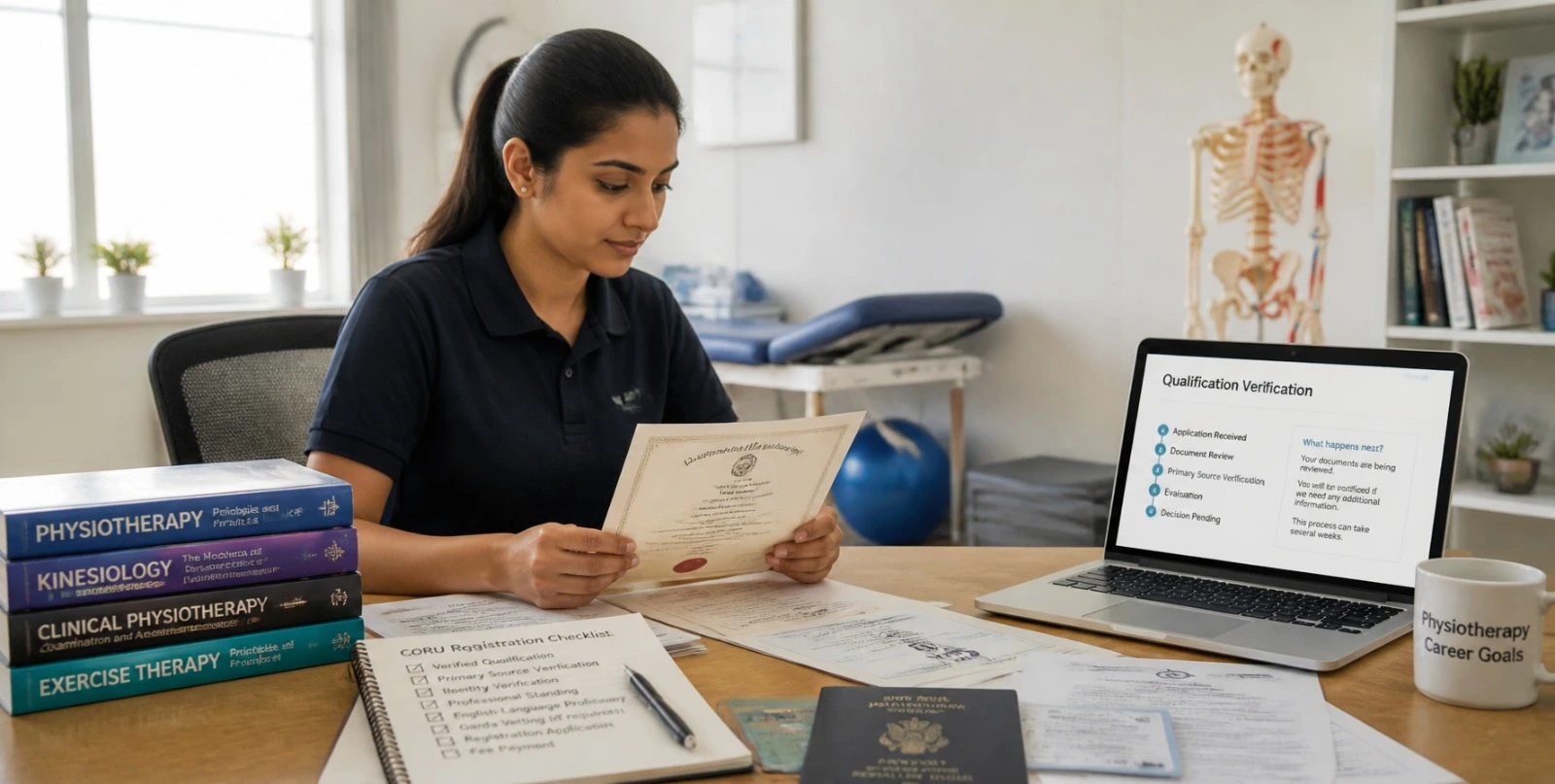

If you have completed a healthcare degree in India or another country and are looking to work in Ireland, there is one thing you will need to ascertain, which is whether your qualification will be recognised by CORU. Having completed your degree, gained clinical experience, and worked in your profession for years does not guarantee that your qualification will be recognised for registration in Ireland.
This is where you may get confused. What documentation do I need to get? Will they check my clinical training? What if the course doesn’t cover all the requirements of CORU? So, understanding how CORU qualification recognition process works will help you save a lot of time and prepare properly for your application. This blog will explain how the process works, how to verify your qualification for CORU, which documents you need, and what happens if CORU asks for more information.
What does qualification verification actually mean?
Qualification verification is the process through which CORU International registration, Ireland’s health and social care professions regulator, checks whether your education and training meet the requirements for your profession.
If you studied outside Ireland, you have to prove your competency to get registered in Ireland. Your degree certificate is evidence that you have completed your qualification. But CORU wants to know how your education and work experience have prepared you for professional practice. You will be required to provide your educational details, such as transcripts, course syllabi, details of clinical placements, practical training, etc., depending on the profession you are in.
When you are assessed, CORU reviews your academic qualifications and compares them with the standards expected for your profession. That’s why it is very important to know how to verify your qualification for CORU and prepare your documents early. Ensuring that everything is in order can save a lot of time because it helps CORU to understand your educational background and training easily and paint a clear picture of your academic background and practical experience.
Steps to verify your qualification
Check Your Profession’s Registration Requirements: For that, you have to visit the official site of the CORU and understand the latest information regarding the registration. You must take a look at the overall application process, the details and supporting documents required. You should not make assumptions based on a friend’s or colleague’s experience because requirements may vary depending on your profession, qualification, and circumstances. Ensure you have checked how the documentation should be submitted and whether any documents will have to be submitted by your institution or university. It is much easier to take care of this matter beforehand.
Gather your educational documents: This is one of the most important steps in the CORU qualification verification process. Here, you are required to provide your graduation certificate, complete academic transcripts, along with course syllabus or curriculum. You need to give all information regarding your clinical placements, internships, practical training, and research projects depending on your course. If you do not have any of the required documents, contact the university at the earliest, because obtaining all those details may take more time than expected. If the university has a different way of calculating your placement hours, which is different according to your medical practitioner registration board’s standards, you should not change the numbers yourself. Get an official statement from the university and add to the application.
Submit the application: Complete the application, providing complete information and attaching all required documents. If you are applying through CORU’s online application system, read the instructions for your profession in advance.
Wait for the Qualification Assessment : your Healthcare Professional Registration will check your documents against the requirements for your profession. How long this takes depends on whether your application is complete and if anything has to be checked with your university or employer. Don’t forget to check your email regularly so that you won’t miss any updates from CORU.
Follow the Assessment Outcome: Here, you have to read the decision of the CORU carefully. The decision may confirm recognition, or CORU may ask for further information.
Basic documents you’ll need
- Valid passport ( a clear copy of the front and back)
- Degree certificate along with transcripts, mark lists and syllabus
- Clinical placement or internship certificates
- Employment letters
- Evidence of name change (if any)
- Professional registration certificate or proof of registration in your home country.
- English proficiency test result
- Copy of research project
This is only a preliminary list for CORU qualification verification , so CORU may ask for additional information depending on your profession and circumstances. If any document isn’t in the accepted language, you need to provide a certified translation of the same.
What if your qualification doesn’t fully meet the requirements?
A good place to start is a close reading of the assessment decision. It will tell you what happened and what you need to do next. In addition to your profession and identified gaps, CORU may also ask you for other documents or to meet some conditions.
In fact, if you fail to meet CORU qualification recognition standards as per CORU’s guidelines, you have three options according to the guidelines of CORU, such as
Period of adaptation,
Aptitude test
Reapplication.
Therefore, read the decision letter fully. If you require further academic information , contact your university and ask for the documents that you need. They may be able to give you detailed information on your subject, clinical placement records and other evidence of your training. If you are still unsure, then look at the official CORU guidance. This will help you understand the decision and know what to do next.
If you have undertaken your qualification outside of Ireland you will need to complete a qualification verification process. Ensuring that you have all of your documentation in order, checking what is required for your profession and following the correct procedure will ensure you don’t face any unnecessary delays.
At Beverse, we help healthcare professionals from eligibility checks to the overall registration process. If you’d like support with CORU registration online or want to have a one-on-one call regarding how to verify your qualification, get in touch and take the next step toward working in Ireland. Let us help you prepare your application and take the next step towards your healthcare career in Ireland.