

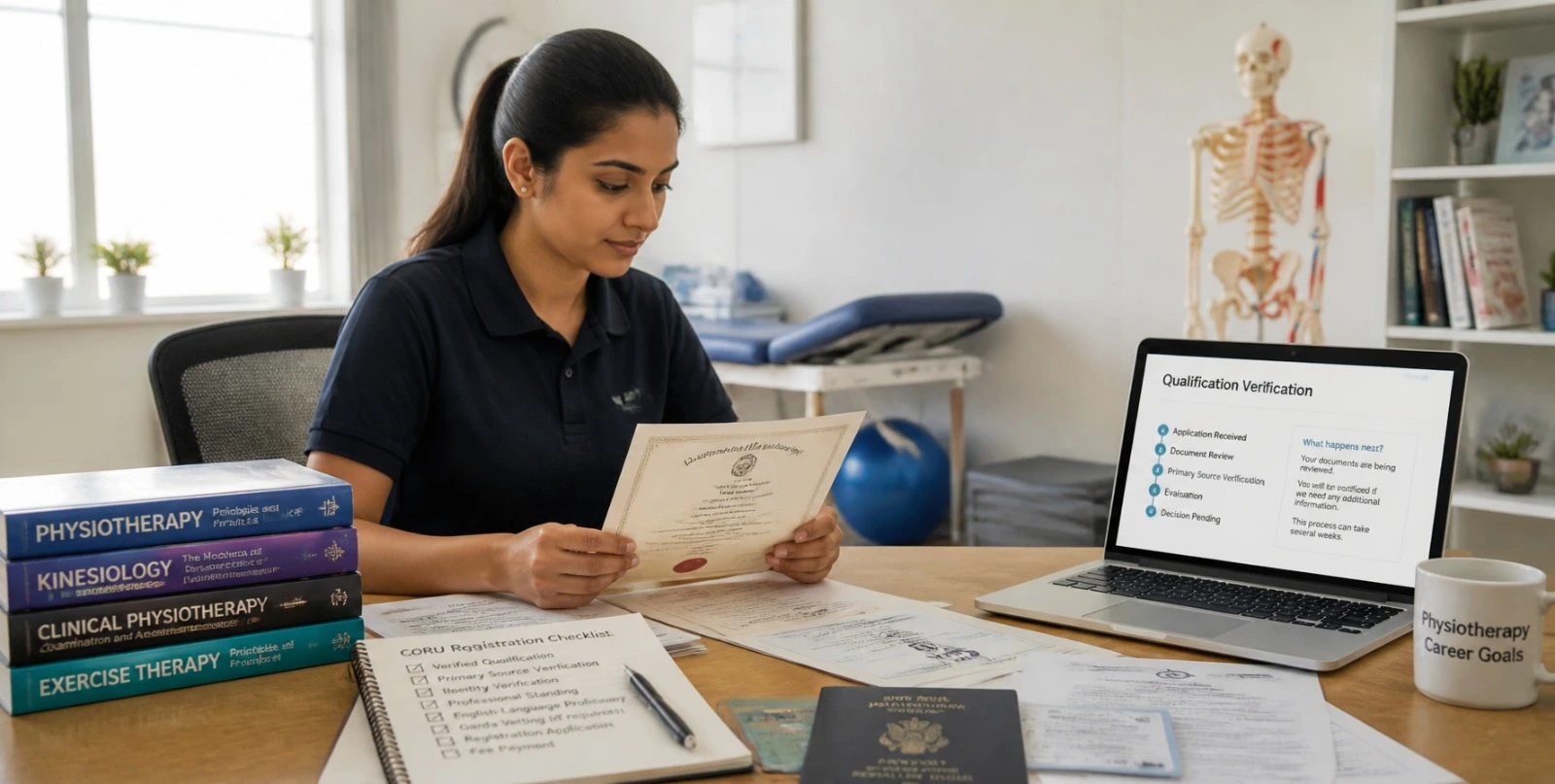

If you have recently completed your healthcare degree and are looking to register with CORU in Ireland, you might be beginning to gather your academic certificates, transcripts and other documents. If your qualification was completed outside of Ireland you may need to get your qualification recognised. This can include providing information about your education, course, subjects and clinical training.
Your university can provide you with the academic documentation that you need. Knowing how your university can help you during your CORU registration can help ensure you start gathering the documents you need early.
In this blog, we will help you understand the role of university in CORU registration and how universities support CORU registration.
How your university supports CORU registration
University verification for CORU registration can be considered a very important thing of your application process. Your university is likely to provide you with the most important information regarding your academic background. Depending on the course and documents you need, your University can help with:
- Academic Certificates : Provides a copy of your official academic certificate.
- Academic Transcripts : Provides you with a copy of the subjects you studied and grades received.
- Course Information : Provides you with your course syllabus, curriculum and subjects.
- Programme Information : Provides you with information about how long your degree was.
- Details on your clinical training : Provides you with information about your practical sessions, internships and clinical placements.
- Further Academic Information : Provides you with any further information required.
This information is needed so that CORU can understand your educational background. However, your university cannot determine if your qualification will be recognised by CORU. This is determined by CORU depending on what they require. Though university verification for CORU registration is mandatory.
Providing course details and academic documents
You may assume that providing a copy of your degree certificate and transcript will be enough to show and prove your competency. However, sometimes CORU will require more detailed information on your course. This can include understanding what subjects you studied, the academic information provided and practical training.
In detail, your university can provide you with:
- Full academic transcripts : All the subjects you studied and grades.
- Detailed course information : Information on what you studied.
- Course syllabus : Information on the course you completed.
- Length of subjects : Information on how long each subject/module was.
- Practical training : Information on your practical sessions.
- Hours of Academic/Clinical training : Information on how many hours of academic/clinical training.
If you have undertaken training in hospitals or labs, for example, you may need official information on how long you trained for. Your university can help you get this information from the appropriate department. When gathering your documents, make sure they are complete and all information is clear and accurate. If they are incomplete, contact your university as early as possible.
Supporting qualification recognition
Qualification recognition is an important step for international graduates wanting to work within a regulated healthcare profession in Ireland. CORU international registration body wants to compare your qualification to the standards of your profession in Ireland. To do this they may need evidence of what you studied, what the learning outcomes were, how many hours of academic training you had and what clinical training you undertook. So, here your university can provide official information on your programme.
Whilst your degree certificate shows that you completed your qualification, your transcript and course syllabus give you more detailed information. Evidence of your clinical placements can also help give you more information. Knowing how your university can help with your CORU registration can help you ensure you have more information on your education and training.
If you are registering as an international candidate, ensure you know what documents you need for your profession. Always keep in mind that your university can provide evidence; CORU will decide if your qualification is recognised. Even if your university can provide you with all the documents, you may still not get your qualification recognised. It’s your Medical practitioner registration body will assess your information to meet their professional requirements.
What if your university does not provide the required documents?
Sometimes getting documents from your university can be difficult. You may have graduated some time ago; your department may have changed, or they can take a long time to get back to you. If your university cannot provide you with a certain document, you can try:
- Contacting the exams department : Usually your exam or academic department can provide you with transcripts and official academic documents.
- Contact your department : If you need your course syllabus or clinical placements, contact your previous department or course co-ordinator.
- Ask for alternative documents : If they cannot provide you with the specific document, ask if they can provide another official document with the information you need.
- Keep on top of your requests : Make sure you are keeping track of your requests.
- Contact CORU when neccessary : If you cannot get a specific document, contact CORU to see if there are alternatives.
Always keep in mind not to assume that an unofficial document will be accepted.
Tips to avoid mistakes
Requesting documents from your university may sound straightforward, but a few small mistakes can lead to unnecessary delays in your CORU healthcare professional registration process. Here are some tips to keep in mind:
- Ensure you submit certified copies or official records during your registration process.
- Ensure your academic transcripts are complete including all the documents and details , both your personal and professional .
- Consider requesting course details, and placement records from your university if they may be relevant to your application.
- Always double check and ensure all your documents are in the correct format.
- Get in touch with your university as quickly as possible , so you can and arrange the required documents if CORU asks for any additional documents.
Paying attention to each and every detail will help you in avoiding the mistakes which may slow down your application to CORU.
Understanding the role of university in CORU registration and knowing how universities support CORU registration can have a significant impact in managing your time during the application preparation and submission. It assists by providing transcripts, certificates, syllabus, other required course details and records of your clinical placements. Obtaining the required documents can be considered the most significant process of your CORU journey. It is equally important to ensure the documents submitted are accurate and complete.
So, contact your university early, as processes and document requests may take some time. Once documents are requested, check them for accuracy. Even spelling mistakes can delay the process. Depending on the stage you are at, certain documents may be more important. Prepare accordingly.
At Beverse Health, we help healthcare professionals with the entire application process, from eligibility check to the final submission. Whether you’re someone applying for CORU registration online, applying as an international candidate or applying for CORU registration from India we’ll be there with you. If you have questions about the CORU application process or requesting academic documents from your university, reach out to us now. We can help you take the next step towards practising in Ireland.