

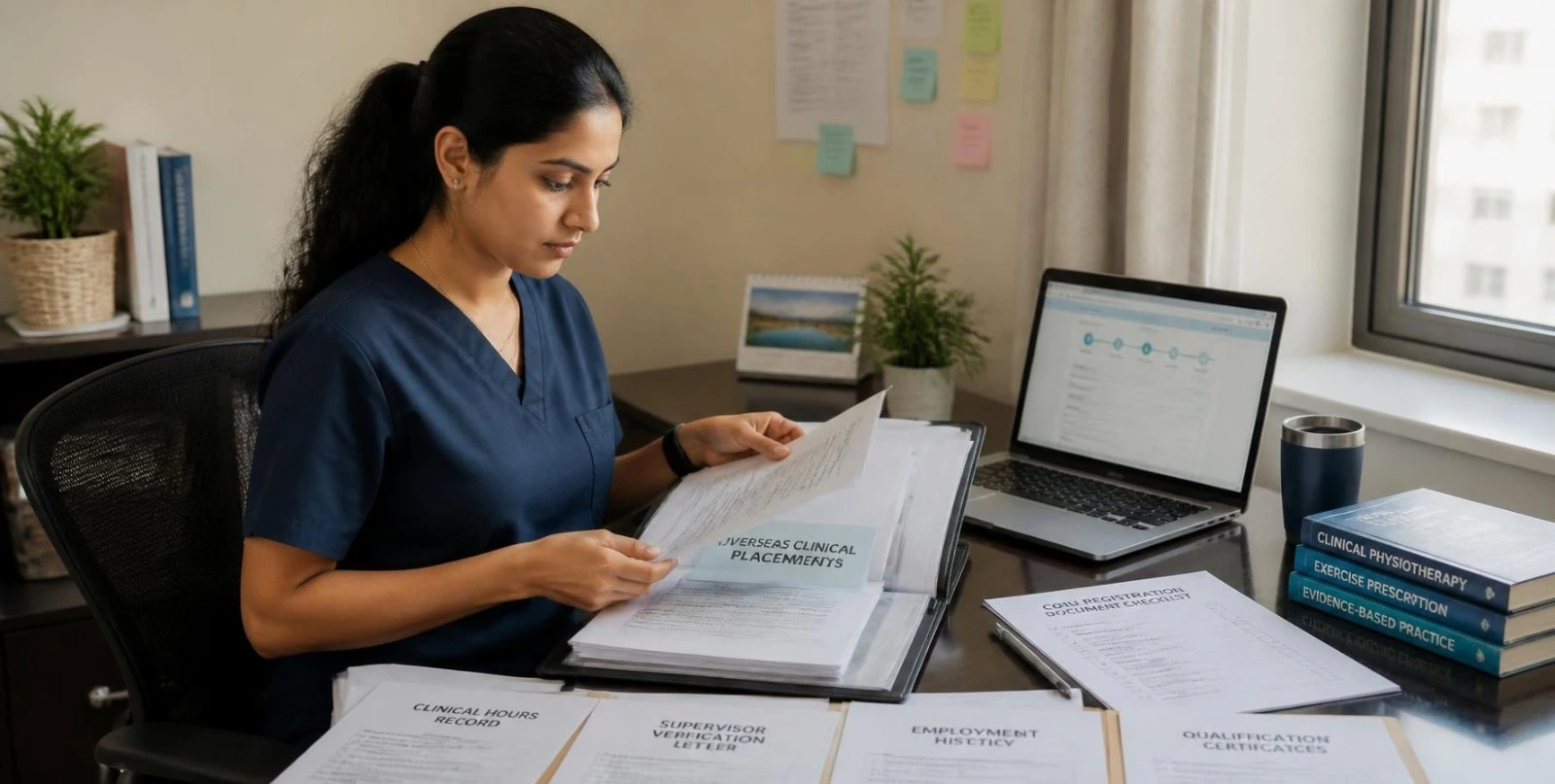
Are you a healthcare professional who is thinking about applying for CORU International Registration ? Are you unsure whether the clinical placements you did in your home country will count toward your application? You may have spent months in hospitals, completed internships, worked in community settings or taken part in practical training as part of your studies. But when you start gathering your documents, you might begin to wonder: will all of that hands-on experience actually be recognised? That’s where the importance of clinical placement records comes in.
When CORU reviews a qualification, it carefully looks at your education, training and professional background. The goal is to make sure your experience meets the standards required in Ireland. Your clinical placements need to match your profession clearly. So you have to be backed up with solid documentation.
In this blog, we’ll look at how clinical placements for CORU are considered, what documents are helpful and how you can organise your evidence properly before you submit your application.
What is an overseas clinical placement?
An overseas clinical placement is the hands-on training you do as part of your education in a country outside of Ireland. It allows you to take what you have studied in the classroom and use it in a healthcare environment.
Depending on your job and your course, your placement could have been in a hospital, a clinic, a rehabilitation centre, a community service, a lab or some other place where healthcare is provided. You might have worked with patients or people who use services while being watched over by a professional, and you might have been checked on as part of your studies.
Clinical placements done outside of Ireland can be a part of your learning and development. That is why it is an idea to keep good records of them even if the placement happened many years ago. These records might be helpful when you are getting ready to show your placements as proof for your practitioner registration.
Does CORU accept overseas clinical placements?
An overseas clinical placement can be considered by CORU, but you should not assume that every placement will automatically be accepted. International qualifications are assessed on an individual basis, so the details of your education and training are important.
When you provide evidence of a CORU overseas clinical placement, CORU may look at several things. These include whether the placement was closely related to your profession, if it was part of your syllabus, what kind of practical training you had and how you were supervised and evaluated. Each of these points helps CORU understand your experience. This is why your documents are important. Your documents should provide enough detail for CORU to understand the nature and scope of your practical training. The clearer your records are, the easier it is to explain your CORU overseas clinical placement during the assessment process.
What details about your clinical placement may be required?
What would you like to know about your clinical placements for CORU ? When putting your application together, it can be helpful to keep a log of all your placements. Take them one by one. You have to note the place where you were trained, the duration, and the role or type of work. You may be asked to provide information such as:
- Start and end dates and the total duration of the placement.
- Number of clinical or practical hours completed.
- Type of patients or service users you worked with.
- Areas of practice covered during the placement.
- Types of clinical cases you were exposed to or handled.
- Main duties, procedures, and activities completed.
- Level and type of supervision provided.
- Name and position of your supervisor.
- How your performance was assessed.
- Evidence showing that the placement was part of your qualification.
- Having these details ready can make it much easier to put together your application and respond if further information is requested.
Documents you may need to support your placement
Your placement details should be supported by official documents wherever possible. CORU needs to understand what your placement involved and how it formed part of your education or professional training. Depending on your profession and individual application, you may need documents such as:
- Official academic transcripts.
- Course or programme information.
- Clinical placement records.
- Placement completion certificates.
- Clinical hours or logbooks.
- Placement assessment forms.
- Detailed information on the syllabus or curriculum.
If your university provided separate records for different placements, keep them together and check that the dates and hours are the same as in other documents too. If you notice that something is missing, you must contact your university or placement provider asap rather than waiting until you are ready to submit your application.
How to prepare your clinical placement evidence
You don’t need to make this process more complicated than it needs to be. So, start with the placements you completed, because it can be considered one of the most important CORU clinical placement requirements.
- List all of your clinical placements and the organisations or facilities where you undertook them.
- Please list the dates, duration and total number of clinical hours for each placement. If you have a logbook/placement record, use this to cross-check the information.
- Collect all official documents relating to each placement (certificates, logbooks, assessment documentation, etc.). Check all paperwork to make sure your name, dates, times and placement information are all the same. If you are missing anything, please contact your university or placement provider as soon as possible to ask whether they can provide the evidence required.
- If you are preparing for CORU registration online, keeping all of this information organised from the beginning can make the application process much easier to manage.
Final checklist before your CORU application
Before submitting your application, make sure you have:
- Clinical placement details.
- Total clinical hours.
- Placement locations and dates.
- Supervisor information.
- Placement assessments.
- Official academic documents.
- Course curriculum or syllabus.
- Supporting letters, where required.
You must make sure all the details in all your documents match. It’s easier to catch these problems early than to chase down documents later. Because your overseas clinical placement matters, it’s only part of what CORU looks at. They also need clear, official proof of the training you completed and how it fits with your qualification.
It helps to read the CORU clinical placement requirements before you apply. That way, you can prepare the right documents and avoid confusion. You can also compare your records with the current requirements to spot anything missing. If you are applying to CORU from India or another country, start collecting your placement records as early as you can. Check the specific requirements for your profession.
At Beverse Health, we help healthcare professionals with their CORU registration from India, including end-to-end healthcare professional registration support. If you are unsure about your placement records or other registration documents, you can connect with us to make your CORU journey more organised and easier to manage.