

Getting your CORU registration is, of course a vital step for any international healthcare professional looking to establish their career in Ireland. What comes after that? The next step is obviously to find your first healthcare job after CORU registration and set yourself up in the country’s healthcare setting.
For so many international healthcare professionals, this phase is going to be full of questions. Where do you apply? How do you go about preparing your CV? What sort of questions can you expect in the interview? What are the expectations in terms of working in Ireland?
Starting a career in a new country can be a bit of a daunting prospect, particularly if you’re not at all familiar with the health care system. A bit of preparation will go a long way to make the process easier and will help you go into your job search with a bit more confidence.
If you’re wondering how to get ready for your first job in healthcare, we will help you understand it through this blog, including the key things you need to know before you start your career in Ireland.
Understand your job opportunities after CORU registration
Once you’ve completed your CORU registration, you should go ahead and start looking at the jobs available in your registered profession. CORU registration enables eligible professionals to practise in their respective regulated professions in Ireland, subject to meeting the relevant employment and immigration requirements. Therefore, it is necessary to know how to prepare for your first healthcare job in ireland.
There are a number of healthcare settings where you can look for appropriate posts depending on your own qualifications and experience.
- Public healthcare: The Health Service Executive (HSE) is Ireland’s public health service. You can view the range of posts available in hospitals, community health and other public health services.
- Private hospitals: many private hospitals will recruit appropriately qualified staff for a range of clinical roles.
- Rehabilitation centres: for the professionals who are involved in the rehabilitation of patients, in their recovery and in long term care.
- Private clinics: you can also look for vacancies in the specialist clinics and the independent healthcare organisations.
- Community healthcare services : these provide healthcare support and care to people in the community.
You must carefully consider what skills , experience and responsibilities are required within the role by reading through the description. Consider if this particular role matches your academic background . And always be aware of differences in recruitment within public and private healthcare employers. Here are the things you can follow to get your first healthcare job after CORU registration.
Prepare a professional CV and Cover Letter
First of all, prepare an updated CV and a cover letter including information on your educational background, experience in employment, clinical knowledge and skills. Keep in mind the given points.
- When you are applying for your particular healthcare role, you must include your CORU international registration status clearly in your CV.
- Ensure you include your personal details, such as your full name, address, contact number, email address, etc.
- Ensure you include your professional overview, including your graduation certificate, experience letter and other qualifications and any training you have undertaken.
- Ensure you include your hands on training experience with your previous work experience mentioning your responsibilities, practical experience and areas of specialisation.
- Include your professional skills, such as practical, technical, communication and teamwork skills.
- And beyond this, add more training information such as relevant workshops, certifications and professional development courses.
Make sure your cover letter is clear and confident. It must explain why you are interested in this particular role and how your experience fits in with the requirements of the company. However, avoid repeating the same cover letter in every application. With a small amount of effort to tailor this to each application, it can make a big difference!
Improve your communication skills
Good communication is at the heart of great healthcare. Because, each and every day, you will be connecting with patients, their families, and your wider team .
Tips for good communication are as following:
- Practise speaking everyday and build your confidence.
- Get familiar with how the local people in Ireland are speaking.
- Include the common medical phrases more when you speak.
- Practice active listening so that you are really hearing what your patients are saying and what is concerning them.
- If you are involved in any treatment or care, try to explain it in plain English.
- Learn how to communicate with patients of all backgrounds in a polite manner.
- Build confidence in talking about practical observations with your colleagues or team.
Prepare documents and employment requirements
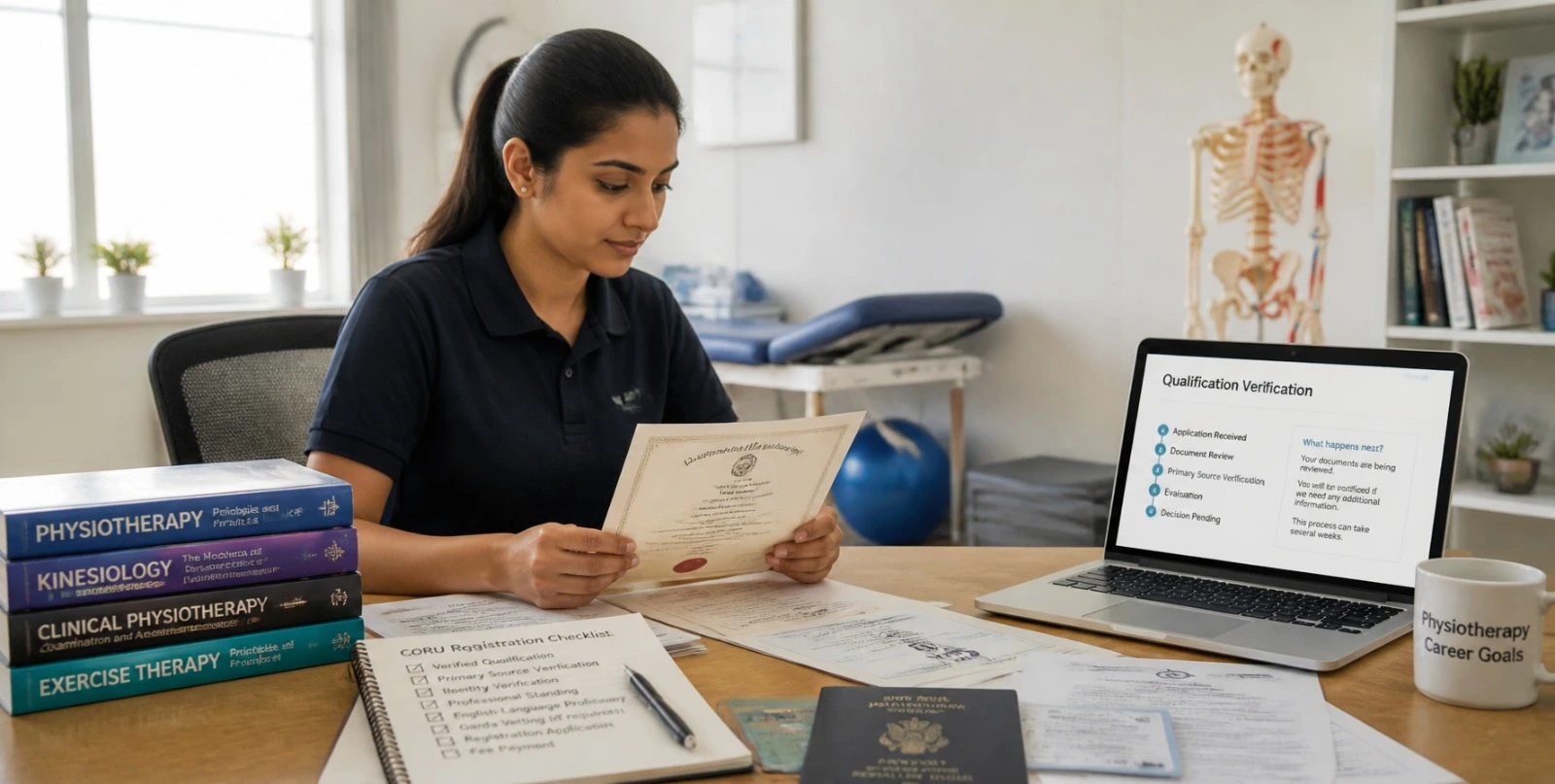
Documents can be considered the most important. Some important documents you may need include:
- A valid passport and the correct immigration permission.
- CORU medical practitioner registration confirmation and registration details.
- Updated CV and educational certificates.
- Previous employment letters along with professional references.
- An appropriate police clearance certificate (PCC)
- Further training and professional development certificates.
- Any further documentation that the employer may require.
If you’re an international applicant, you should check the employment permit and immigration requirements that apply to your situation. Having a healthcare professional registration does not in itself give you the right to live or work in Ireland.
Improve your interview preparation
Here are the tips for how to prepare for your first healthcare job, especially the interview preparation:
- Ensure you have enough information about the clinical setup you have applied
- Ensure you’re well aware of the job role, duties and responsibilities
- Ensure you’re prepared well for the common questions and have practised explaining about your experience of work.
- Be confident that you can talk about previous difficult situations you have dealt with.
Never stop improving your skills
You must keep learning and improve your skills. because getting your first job is just the start of your professional journey in Ireland. Healthcare practice, the technology we use and the professional guidelines that we work to will all be in a state of continual development. So just as important as getting your first job, it is equally important keeping your knowledge and skills up to date. As a newly employed healthcare professional you’ll probably need a bit of time to get to know the way things are done in the workplace, to get used to your new responsibilities and to become comfortable with the healthcare system as a whole.
You can make this transition easier by following these practices:
- Attend appropriate professional training courses and workshops.
- Keep up to date with current healthcare practice and professional guidelines.
- Learn from the more experienced colleagues and the senior people.
- Take part in CPD activities.
- Be open to constructive feedback and opportunities to improve.
- Keep developing your clinical knowledge and practical skills.
Don’t feel you have to know everything on day one. Your first job is also an opportunity to gain some very valuable international experience and to begin to build your career.
Getting your first job in Ireland as a healthcare professional might be your dream since many years. But before start searching for a healthcare job in Ireland, it is mandatory to complete your CORU registration. Because you are not eligible to practise as a healthcare professional in Ireland without CORU registration.
At Beverse, we help healthcare professionals get their CORU registration online with complete application support through our proguidance mentorship programme via our CORU registration from India portal. So, connect with us today; we are here to guide you at each stage of your application process.